Reynolds RetroSpect(ulat)ive
In Dreams

With the exception of my old school mate Phil M*, no one has influenced how I have listened to music more than Simon Reynolds. He has just released a new book - Still In A Dream - that is a mix of history, criticism, and memoir. Therefore what follows is not a straightforward review but an attempt to make sense of my decades-long encounters with his work - as a mix of history, criticism, and memoir.
I first started listening to music with intent in 1989. I had recently got a job working in a toy shop that meant I had some disposable income to buy clothes and music with. I was intent on making myself less of a social pariah, an effort in which I mostly failed. However I did have two sets of friends - one at school, one at the church youth group - who were all into music. The church group were either into hair mental (the dudes) or chart pop (the chicks). My school friends were into, well, everything. Phil, in particular, had an obsession with music in all its forms. Every spare surface in his room was crowded out with obscure vinyl, cassettes, and CDs. He may also have introduced me to the UK music press.
Massive, garish papers stuffed full of ads and articles on music - the inkies had been around for decades. I think I bought my first copy of the NME in the summer of 1990. Madchester was at its height. The world in those pages was completely alien to me. It may as well have been reporting from Mars.
Soon I was regularly reading NME and Melody Maker (MM) - either buying copies if I was feeling flush or furtively reading them in WH Smiths until the staff started aggressively rearranging magazines next to me. There were a raft of writers - Steven Wells, David Stubbs, Dele Fadele, Kitty Empire, Simon Price, Caitlin Moran, Everett True.
There was one writer that I became particularly smitten with. Simon Reynolds wrote about rock and dance music in a unique way. There were a number of reasons for this.
Firstly, his writing tries to evoke what the music sounds like and how they made you feel. For example, My Bloody Valentine’s All I Need is a “cloud-covered asteroid” - which it absolutely is. Omni Trio and Foul Play “make the drums sing inside your flesh”. The metaphors and comparisons don’t always work for me. But this grappling with sound in itself and its interplay with your body stood out from other writers content to trade in generalities or a focus on lyrics.
This grounding is then combined with all kinds of arcane philosophy - e.g. Deleuze and Guattari’s Body Without Organs as a way of understanding hardcore rave or Klaus Theweleit as a window into heavy metal. It was pretentious in all the best ways.
But this analysis wouldn’t have meant much if the music that he recommended hadn’t been any good and the aesthetic judgments he made had always been radically different to my own. I often agreed with him. I like hardcore (rock and rave) as much as, if not more than, their more intellectual cousins. Britpop was mostly rubbish. Burial was awesome (although I have less interest than he does in Hautology as a project).
He also continued writing a lot and made most of this writing available over the years on his sprawling estate of interconnected Blogger sites. Barely a week goes by without one or two posts somewhere in the Reynolds empire. If I didn’t know better I might expect some kind of dark satanic text mill where third world urchins churn out 300 words on glitchcore. Or these days it would be AI. But the more banal and wholesome truth is that he just really loves writing. I hope the words continue to pour out of him for decades to come.
So lets take stroll down memory lane** and revisit his books.
Blissed Out (1990)
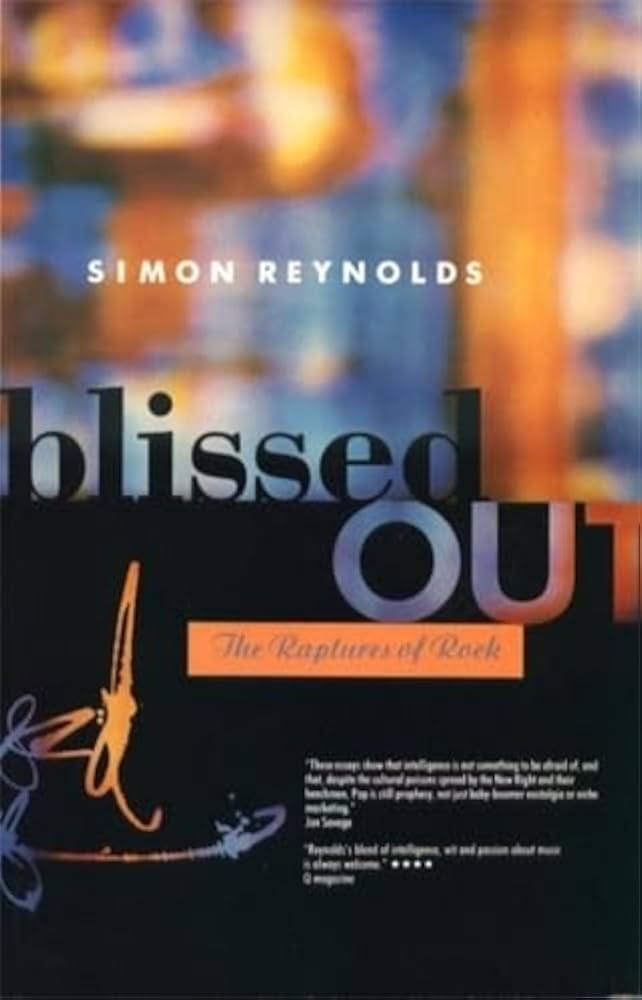
This book was published a few months after I started reading MM. I didn’t actually read the book itself until I found a copy in London bookshop in 1998ish, I have not read it for a long time, and I do not currently have a copy. As I recall, it’s a collection of articles written by SR (and with some contributions by his comrade, David Stubbs). It begins by having a go at the Soul Boys clogging up the charts and then proceeds to investigate the various alternatives (underground and overground) on offer - heavy metal, noise rock, rap, early acid house, Prince, Morrissey, etc. It predates the full bloom of shoegaze, the rise of grunge, and SR’s full on conversion to dance music. Again, memory is a tricky thing so I may have completely fabricated a version of this book.
What brings it back to my memory are the overlaps with his most recent book (certainly its first half). While the perspectives of 1990 SR and 2026 SR are similar, I wonder it what ways they are different. What does 2026 SR think of this first book? What would 1990 SR think of his more mature self and his critical positions? (To be fair, some of his shifts are discussed in the latest book)
Even in 1998, the arguments and the debates that the book were embedded in seemed to be ancient history. As such, I imagine the book itself might be a handy time capsule but I don’t feel compelled to disinter it.
The Sex Revolts (1996)
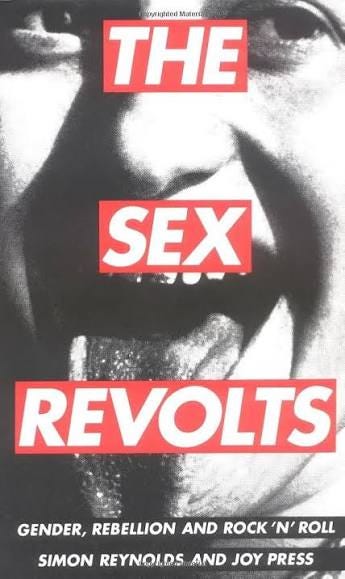
Written with his wife Joy Press. I cannot remember whether I read this in 1996 or 2003. I have equally strong memories of both. Whatever. It is a very thoughtful and thought-provoking investigation into gender in rock. Not just “women playing rock music” but how male musicians and their enablers fans treat masculinity and femininity, men and women, in their art and their lives. Macho men. Soft boys. Madonnas. Whores. People. All that.
Again I do not have a copy of this so I am reconstructing this book from my highly fallible memory. I recall it being a good read. There might have been a touch too much psychoanalytic content in it for my tastes but many of the leitmotifs (oceanic imagery) crop up elsewhere in SR’s work. Again, I would be curious to hear what its authors think of it now, 30 years down the line. I’d also be curious to know what each author brought to the book - and whether they would ever write a book together again.
Energy Flash (1998)
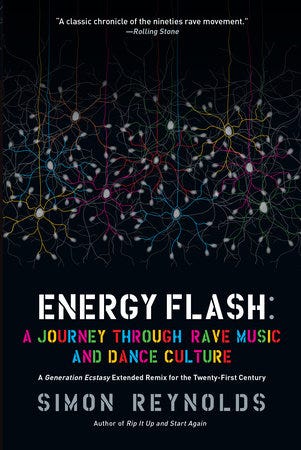
This I definitely bought when it first came out in 98. There was a compilation CD attached to the book that I played at a house-warming that year. I may have read it repeatedly and I have an ebook version. It is a history of the rise of dance music - primarily in the UK. But it is a unique and highly partisan one.
SR approaches it through the music first. There is a lot of discussion about what specific tracks actually sound like. There is plenty of sociological and historical analysis, interviews with participants and protagonists, even some pharmacology - but this starts with the music. As the book begins in the US in the 80s with Chicago House and Detroit Techno and SR did not have his rave epiphany until 91, the opening is similar to his later historical books but then he becomes a participant. Which is where the partisanship comes in. 90s dance music in the UK was made up multiple scenes. The focus for SR becomes the London-centric, working class worlds of ‘Ardkore and then Jungle (what was later dubbed the Nuum). This is contrasted with the more middle-class worlds of Intelligent Dance Music, Minimal Techno, etc.
Class traitor Simon Reynolds wants to argue for the artistic validity of Ardkore and Jungle. And he’s a bit disappointed when Jungle gentrifies with Goldie’s Timeless and LTJ Bukem.
The book ends in 1997 with rise of both Big Beat and Speed Garage. There were two subsequent editions in 2008 and 2013 with additional material. There have not been any subsequent editions which does imply that this story is now largely played out, at least for SR.
Anyone looking for an “objective” history of dance music will be disappointed - as the reviews on Goodreads will attest. SR is a music journo, not an academic historian. Asking him not to voice his opinions and judgments would be like asking Fatboy Slim to not entertain a crowd. Why would you?
Again, as with Blissed Out, the battles being fought here are long ended and one would assume Squarepusher and Grooverider could shake hands like British and German World War II veterans at a Remembrance Day service - both looking forward to a cup of cocoa and a hot bath.
Rip It Up And Start Again (2005)
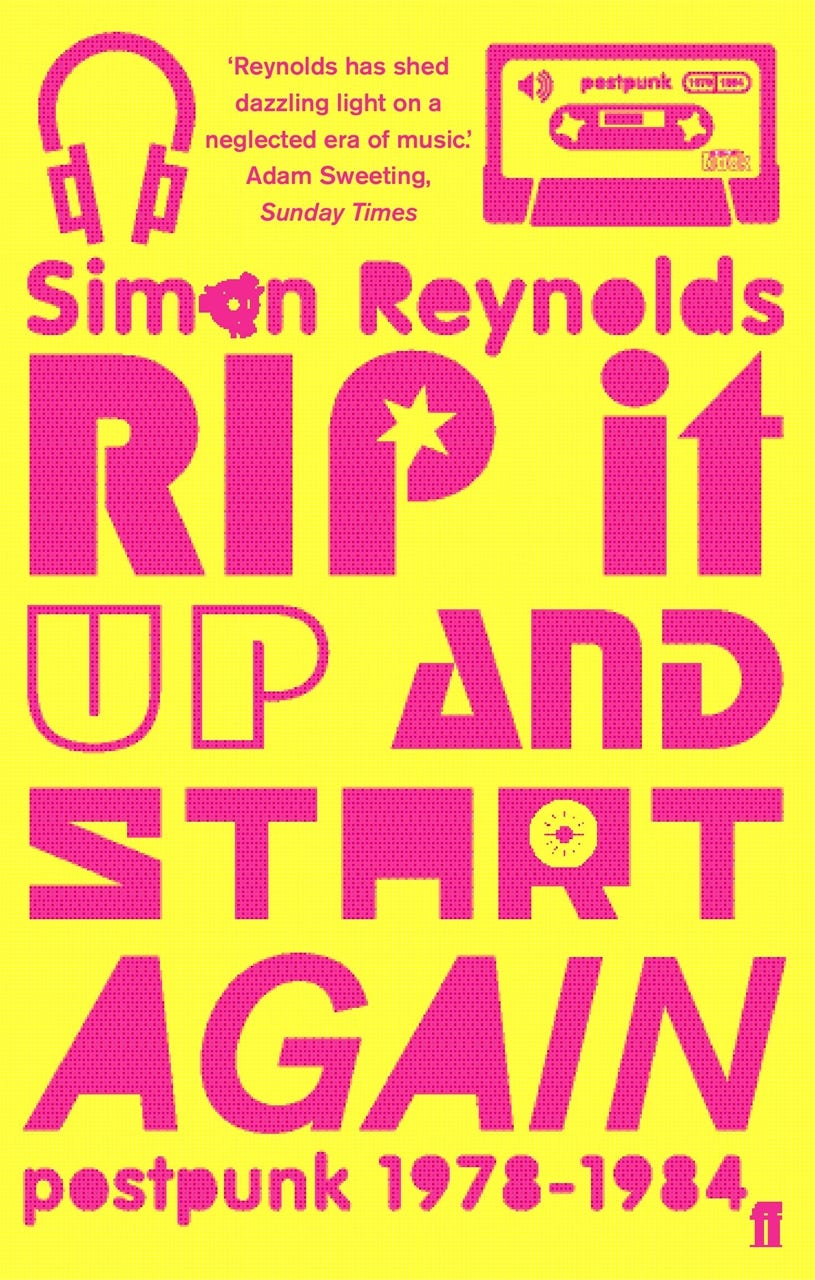
Another one I read when it came out in hardcopy and have the ebook. Twenty years into his career (but also published 20 year ago), this is the first “historical” work that he has undertaken - in that all the key events happened before he became a journo. So it’s a mix of archival research in the music press and interviews with participants. It came out when postpunk influenced music (The Strokes, Bloc Party) was having a moment so I think it got a lot of attention - and hopefully a lot of people bought copies***.
As I am 10 years younger than SR, I experienced this period as a child and this book came out as streaming services were only just emerging. So I had heard of many of these bands but not all - and I knew very little of the deeper stories and context behind them.
Again this is one person’s view of a music period and it makes no attempt to be neutral about the bands it discusses. Caution: Contain opinions. It is a chunky book that at times overflows with bands and incidents and music. But it is certainly value for money.
Bring the Noise (2007) & Totally Wired (2009)
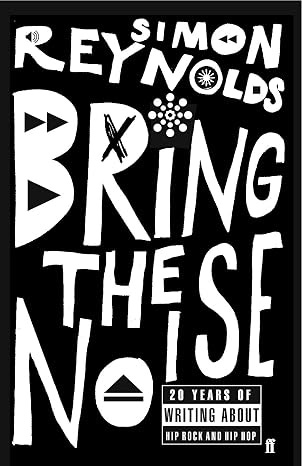
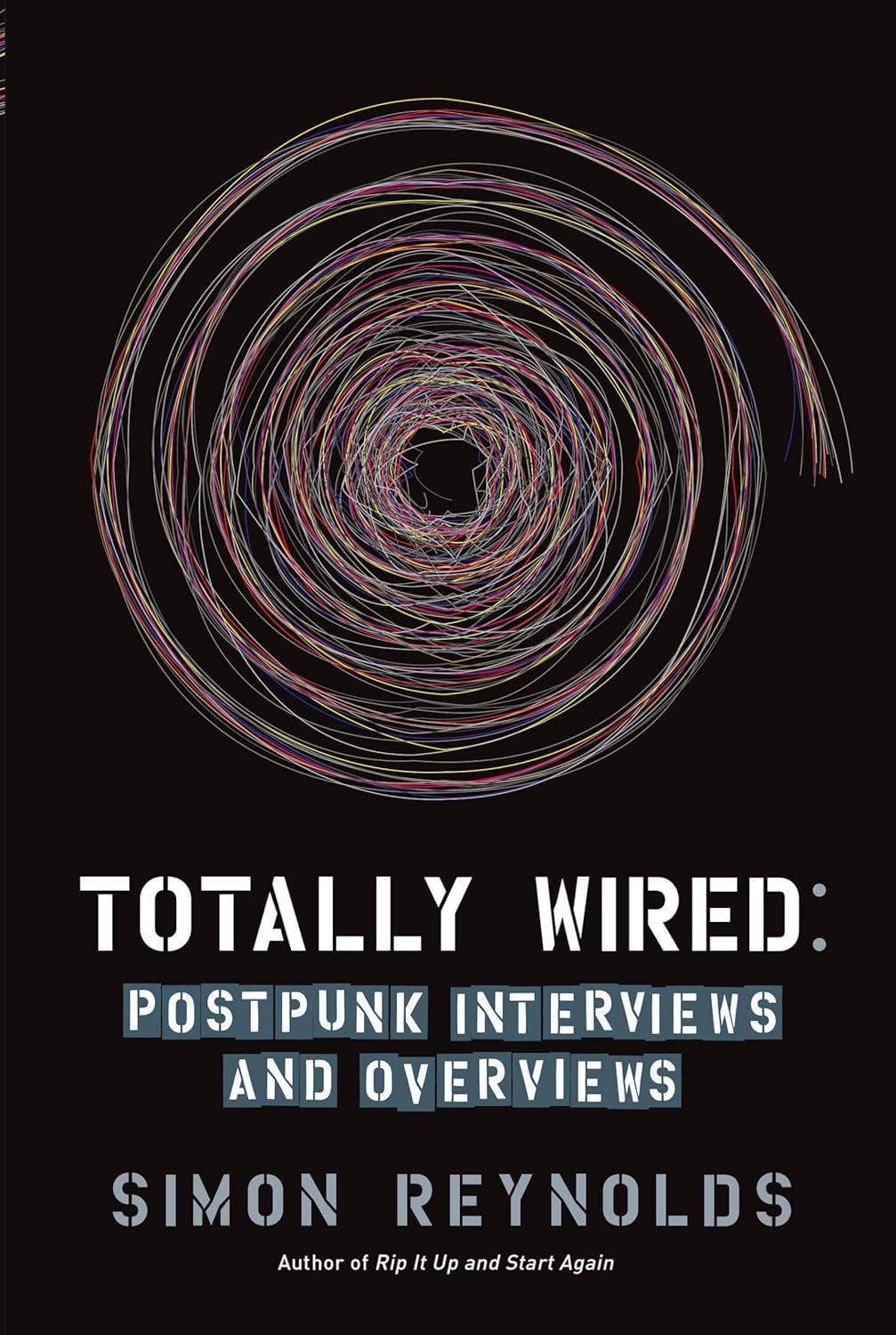
Apparently I bought Bring The Noise in 2012 and I think I read it soon after. It’s a collection of articles written over a 20 year period about rock, dance, and rap music - often with current reflections appended. Many of the articles I had read in their original venues or elements of them had been reused in Energy Flash. There’s a lot of good stuff here and much of it was published in places that are no longer accessible.
Totally Wired contains the interviews that underpinned Rip It Up. I haven’t read it. I’m sure there’s lots of good stuff in there but I read Simon Reynolds for Simon Reynolds. And it struck me that this would mostly be the words of other people.
In hindsight, both of these feel a bit filler-y. If SR himself was reviewing them, he’d say that a best of compilation and a bunch of outtakes were just the artist treading water. And I sympathize with the need for him to make a bit of money while putting together his next book. His books tend to the chunky side so I respect the effort involved. Expecting a Rip It Up every couples of years would be utterly unreasonable.
Retromania (2011)
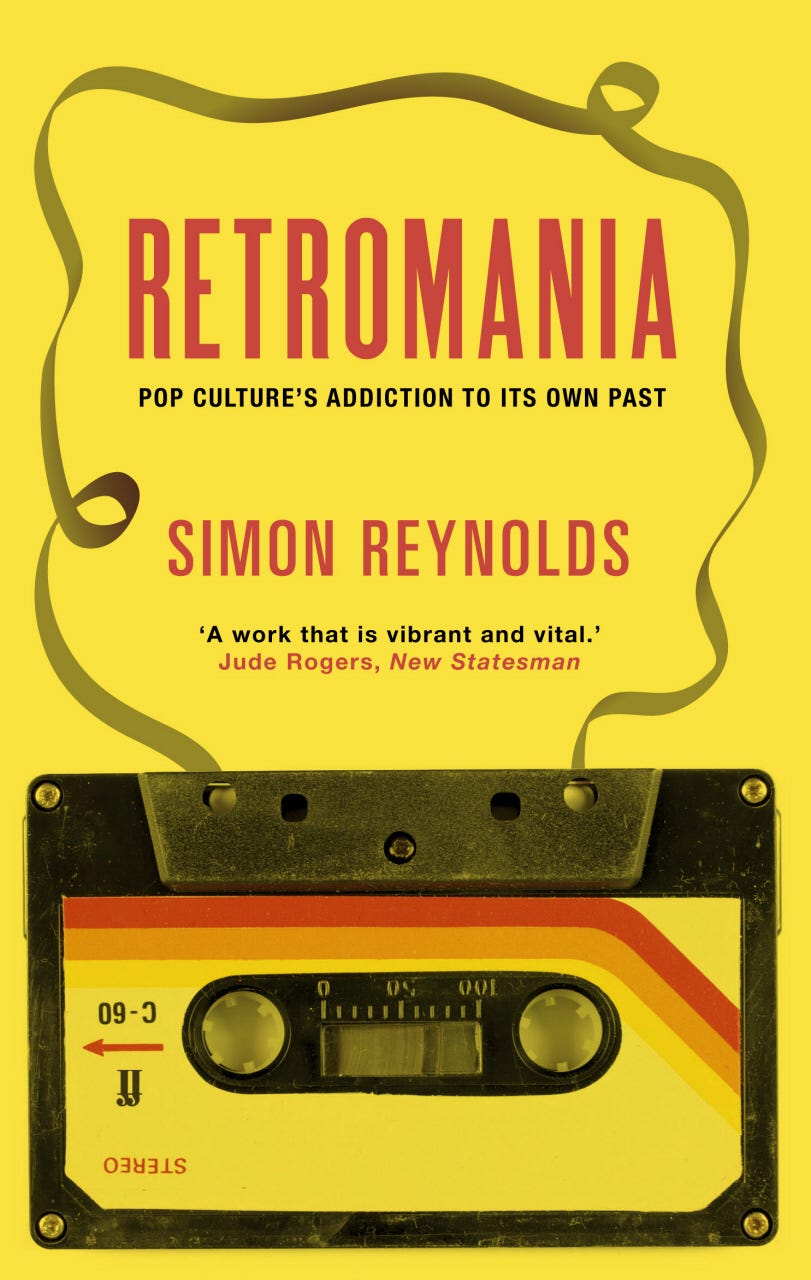
The next book is different again. Not so much a history (with or without authorial insert) as a set of explorations of pop culture’s obsession with, and reimaging of, its own past. In that sense, it is closer to The Sex Revolts as a thematic investigation although the older book has more of a through-line of argument. Retromania is series of discrete essays inspired by the insane increase in the availability of past music over the 00s. A process driven by technology and commerce. Pop is no longer ephemera, lost to time, but ominously omnipresent. There’s no escape from heaven.
But it’s not just iPods and the internet. Biba and vintage chic, Northern Soul, Rock n Roll, The Stuckists. Many topics crop up in SR’s stories.
At the time, I found the fractured and disconnected nature of the chapters in Retromania frustrating. It felt more like the essay collections than the broader narratives of Energy Flash and Rip It Up. Now, I suspect it may be the book that SR ultimately gets remembered for and, after a quick flick through my ebook, I may well revisit it in more depth soon.
Towards the end of the book, SR says “I still believe the future is out there” Is that still the case?
Shock and Awe (2016)
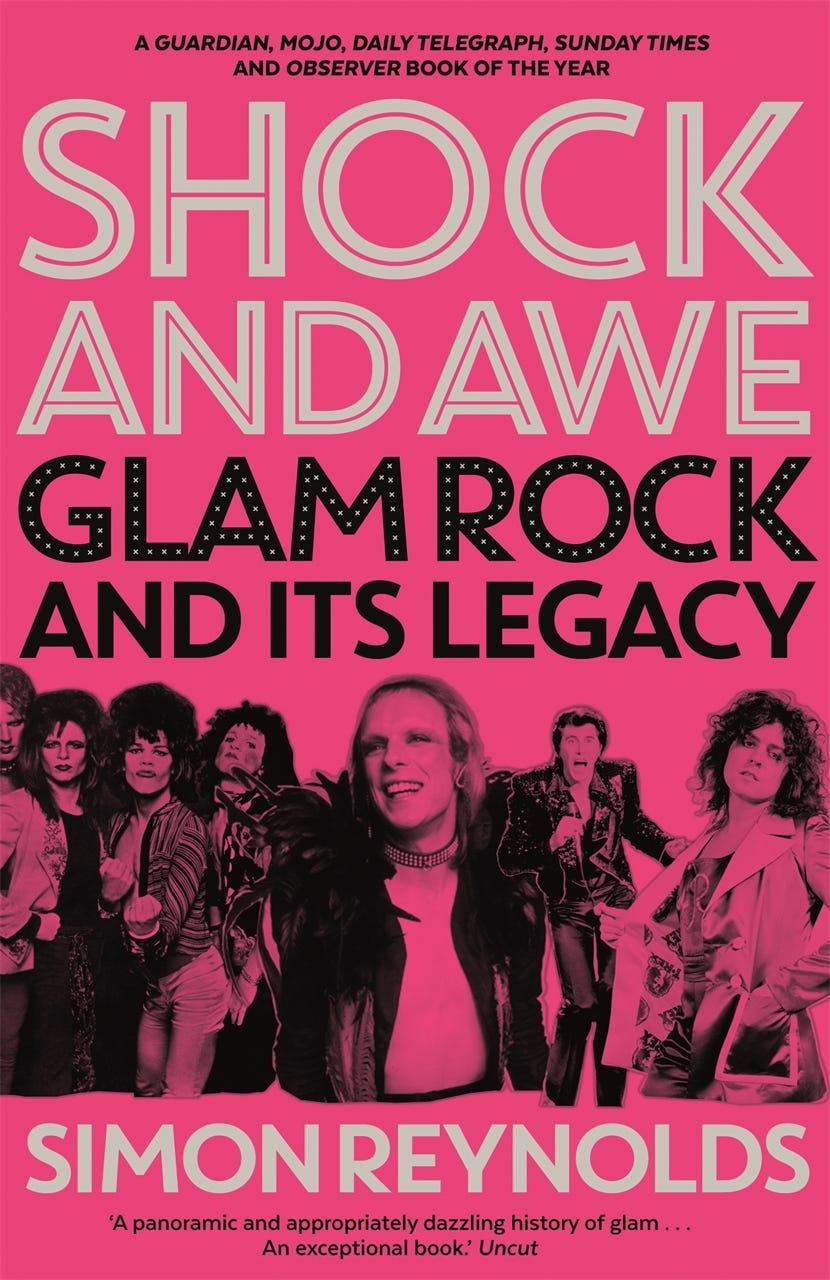
Another history book! “My family went without television until I was around the age of eight, which was 1971, so glam is pretty much the first pop music I can remember clearly.” This is SR going into the music of his childhood. Whereas Rip It Up was a mix of interviews and archival material, Shock and Awe is more purely archival - based on contemporary press commentary and books about, or even by, the participants.
This is a musical period that I have no direct memory of - although many of the bigger musicians covered (David Bowie, Queen, Brian Ferry) lingered as cultural forces into my childhood. So it’s a book that doesn’t have much emotional heft for me but I respect the craft and I enjoyed the read.
Futuromania (2024)
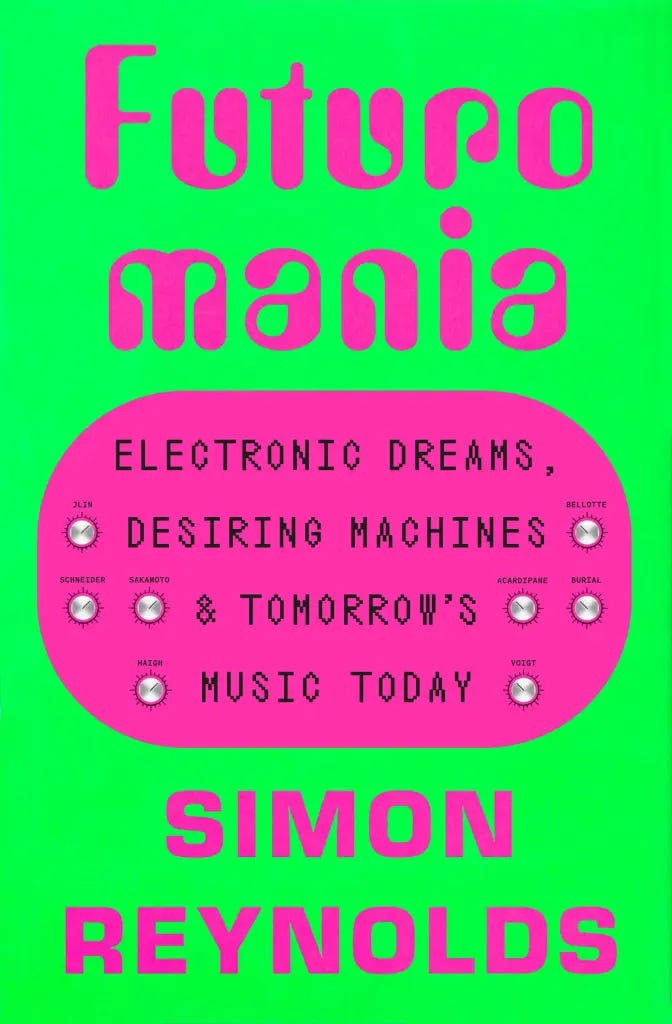
Another collection of pre-existing material from a 30 year span, there was enough in Futuromania that I hadn’t read before to make it interesting. The profile of Rob Haigh / Omni Trio and the two sci-fi essays are particularly memorable.
Still In A Dream (2026)
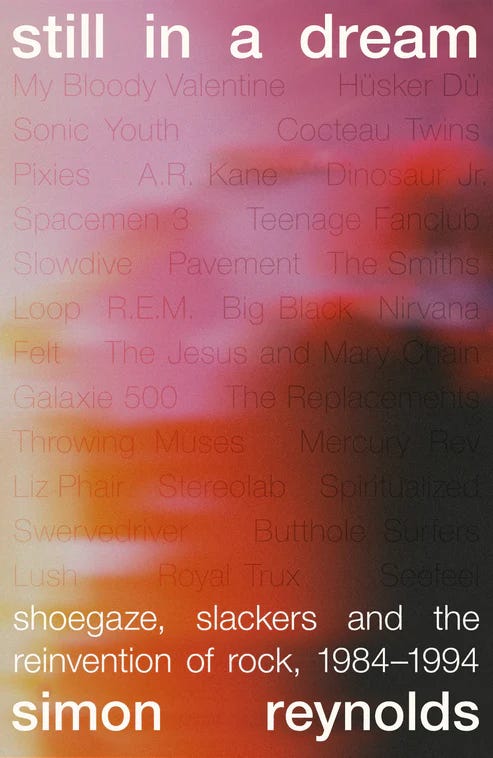
And now we come to his latest book. A decade after Shock and Awe, SR revisits his origin story. Based on some of the press, I had expected it to be more narrowly focused on shoegaze. But it’s much broader than that. There’s sections on C86 and The Smiths and US noise bands and grunge. Pretty much all of the indie rock musicians that SR encountered and had some aesthetic interest in. There’s also an extended love letter to / euology for the inkies and a whole world of popular music journalism that no longer exists.
Unlike Blissed Out or Energy Flash, this book feels less about winning arguments than making sense of lives and times and sounds. There are still many opinions - including enough criticism of enough indie pop figures to generate a bunch of negative reviews from their enablers fans.
Much like Energy Flash, I have actual memories of many of these bands and events (especially in the second half). I remember buying particular albums and going to specific gigs. So the emotional hooks are there a plenty. But these memories grow fainter and more distant. And that’s no bad thing. I have seen Pixies 4 time - once in 1990 and then 3 times after they reformed, the last in 2022. I don’t want to see them again.
The books ends with SR wondering whether his life as a transmitter of musical excitement has been worthwhile and concluding that it has.
I agree.
Simon, please keep writing while there are still words and music.
*Congratulations on your recent wedding. I wish you and your lovely bride all the happiness in the world.
**And then get lost somewhen along Forgetfulness Avenue.
***Now there are historical documentaries about the Strokes and Bloc Party are having revival tours. I feel old.